
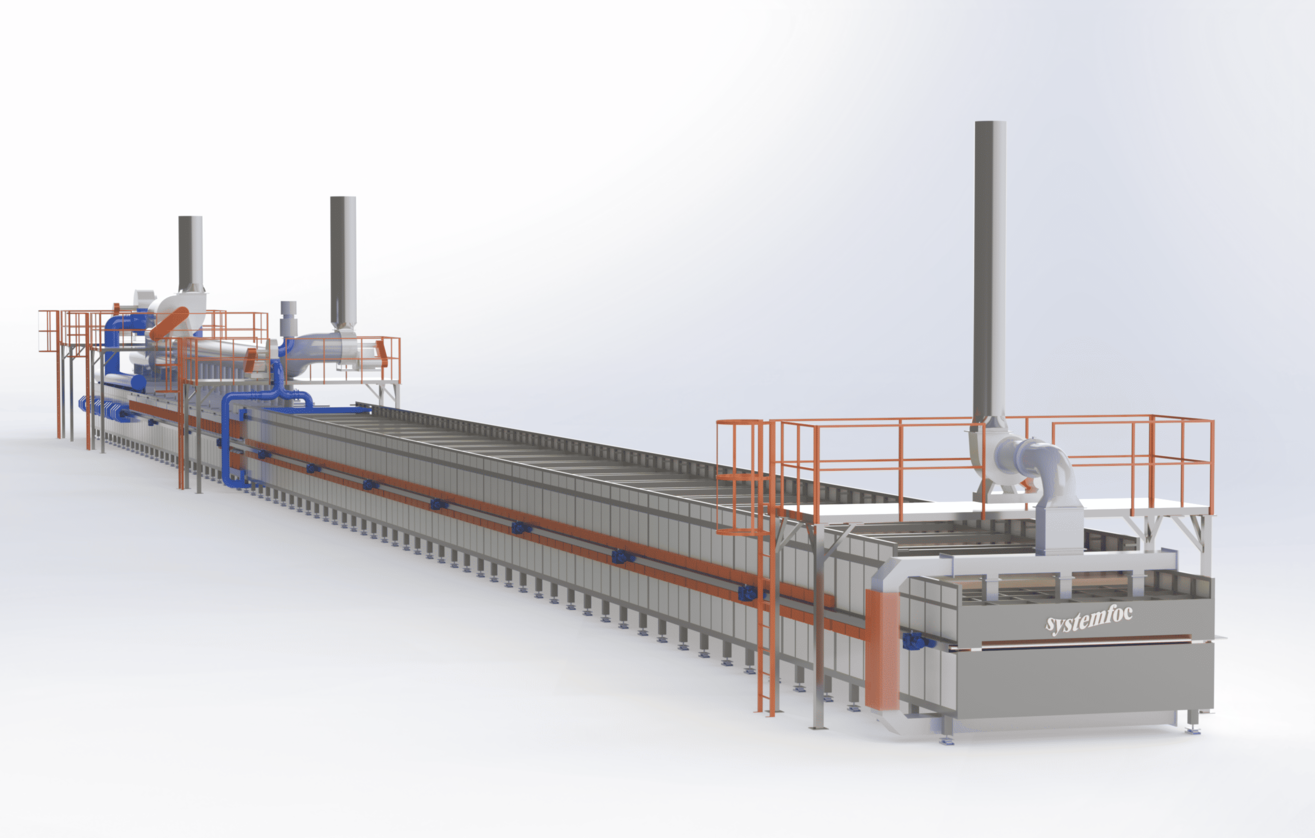
The electrification of the ceramic kiln has ceased to be a technological hypothesis and has become a strategic decision within the sector.
The upcoming commissioning of the second 100% electric kiln at Equipe Cerámicas—with a length of 60m and an estimated production of up to 3,500 m²/day—confirms that electrification has moved past its initial phase and is entering a stage of industrial growth and consolidation.
This step positions SYSTEMFOC as one of the technological players actively driving the energy transformation of the ceramic sector.
From strategic implementation to industrial consolidation
The implementation of the first 100% electric kiln at Equipe Cerámicas was born as an industrial decision aligned with a clear vision of efficiency, decarbonization, and medium-to-long-term competitiveness.
That first 100% electric kiln introduced a technology to the sector based on:
- High-efficiency resistance system capable of reducing energy consumption by up to 50% compared to conventional gas kilns in equivalent configurations.
- Elimination of direct CO₂ emissions by dispensing with any combustion system.
- Greater thermal stability and homogeneity in the final product.
- Reduction in the wear of refractory materials.
Since its commissioning in 2024, this first unit has been operating continuously, under the same levels of production demand as any conventional kiln.
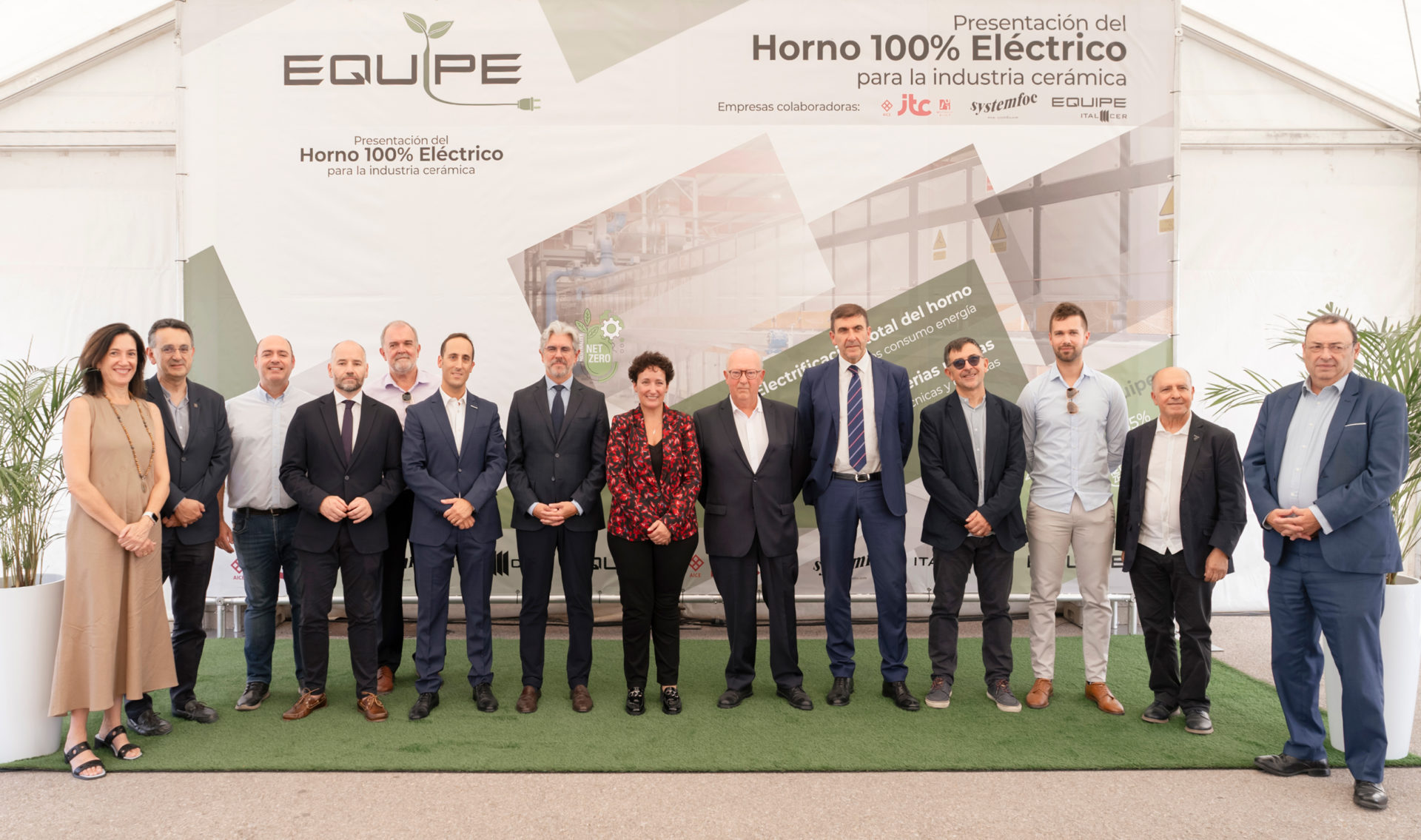
This pioneering character, approached from a strictly industrial logic, is what allows electrification at Equipe Cerámicas to evolve today toward a second implementation that doubles both dimensions and capacity.
The second kiln: size, capacity, and technological maturity
The new 100% electric kiln is not a replica of the first. It is its evolution.
We are talking about a unit that doubles the dimensions and capacity of the first kiln. A technological solution that stands out for the following characteristics:
- Dimensions: 60m long and 2.1m wide.
- Estimated production: up to 3,500 m²/day.
- Estimated consumption: 468 kWh/t
These magnitudes place the 100% electric kiln on the same ground as high-capacity conventional gas kilns.
The difference is not in the size. It is in the energy model and the thermal technology.
We are referring to an installation prepared to operate stably at temperatures up to 1,200°C, with precise zone control, electronic power management, and a modular design that optimizes maintenance and performance.
When electrification reaches these industrial dimensions, it stops being a singular case and becomes a structural alternative.
For SYSTEMFOC, this second implementation represents the natural evolution of a pioneering technology.
Economic viability: beyond energy savings
In the current context of industrial electrification, economic analysis must go beyond the initial investment.
It must consider:
- Reduction of structural energy consumption.
- Stability against gas price volatility.
- Access to Energy Saving Certificates (CAEs).
- Reduction of maintenance costs associated with combustion systems.
- Decrease in complex technical shutdowns.
When the analysis is performed in terms of total life cycle cost, the 100% electric kiln stops being an experimental alternative and becomes a strategic option.
Is it replicable across the ceramic sector as a whole?
For a technology to transform a sector, it must meet three conditions:
- Function in real production.
- Be economically sustainable.
- Be adaptable to different industrial configurations.
The 100% electric kiln has already demonstrated the first two.
The second unit demonstrates the third.
Its modular design allows for the adaptation of dimensions, power, and production cycles according to specific needs. This is not a closed or unique development. We are looking at a flexible technological architecture.
The electrification of ceramic firing is no longer a question of technical possibility. It is a matter of strategic planning.
The transition has already begun
The ceramic sector is in a decisive decade.
Regulatory pressure, ESG criteria, and the need for international competitiveness are redefining the industry’s energy model.
The implementation of a second 100% electric kiln at Equipe Cerámicas responds to a technological evolution that has already proven its technical viability and strategic coherence.
At SYSTEMFOC, we understand this evolution as part of a broader process of energy transformation in the ceramic industry.
The question is no longer whether it is viable to electrify, but what position each company wants to occupy in the energy transformation of the sector.