
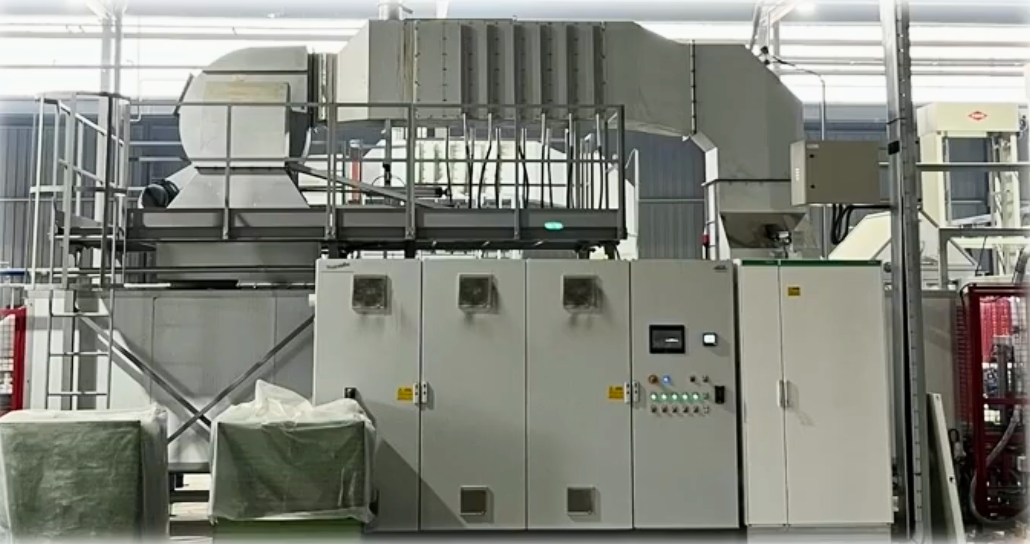
At SYSTEMFOC, the electrification of the drying process is not a future prospect, but an established reality. After years of work, plant testing, and technical optimization, we have fully developed and operational electric solutions capable of meeting the thermal demands of the ceramic sector with guaranteed efficiency, stability, and reliability.
The decarbonization of drying is, for us, a mature field: we understand its challenges, master the key technologies, and know how to adapt them to each plant. From the design of 100% electric dryers to the integration of resistances, heat pumps, or energy recovery systems, at SYSTEMFOC we develop viable and modular solutions to advance toward more sustainable and competitive ceramics.
Electrifying the Ceramic Dryer: A Step Forward
When we talk about decarbonization in the ceramic industry, the focus is usually on firing. Although drying represents a smaller portion of total thermal consumption in the ceramic process, its electrification represents a real lever for advancing energy efficiency and industrial decarbonization.
At SYSTEMFOC, we have been working for years on developing technologies to electrify the drying process with guarantees. The technical maturity achieved allows us today to offer operational and scalable solutions that are already implemented in real environments.
How Can a Ceramic Dryer Be Electrified?
There are different technologies applicable to ceramic drying to replace thermal energy from fossil sources with electric sources. At SYSTEMFOC, we have developed a modular and combinable approach based on three pillars:
- Heat pumps to heat the drying air.
- Electric resistance blocks, easily integrated into existing dryers. Their efficiency can be improved when combined with other solutions.
- Waste heat recovery from other phases of the ceramic process, such as firing, increasing the overall energy efficiency of the system, which will allow us to preheat the air before passing it through the electric heat source.
A Combined Solution: Redesigning to Improve
One of the main challenges when electrifying ceramic drying is the high working temperature for which most current dryers were designed. These conditions make it difficult to directly apply electric solutions with high efficiency, such as heat pumps.
However, at SYSTEMFOC we approach this challenge from a strategic perspective: it is not just about changing the energy source, but about technically redesigning the process to make it more efficient.
Our proposal is based on:
- Extending the cycle time. This allows reducing the temperature needed to achieve complete drying, improving the energy efficiency of the system.
- Reducing the required working temperature. Adapting the dryer design to operate at lower temperatures facilitates the integration of technologies such as heat pumps or electric resistances.
- Utilizing waste heat as a preliminary stage. Through the application of thermal recovery systems connected to other process phases, we preheat the drying air, reducing net energy consumption.
- Combining technologies. We design hybrid and modular solutions that integrate electric resistances, heat pumps, and heat recovery according to the specific characteristics of each plant.
This redesign approach allows us to offer viable, efficient electric solutions adapted to the quality standards and production pace of the ceramic sector.
Real Success Stories: 100% Electric Ceramic Dryers
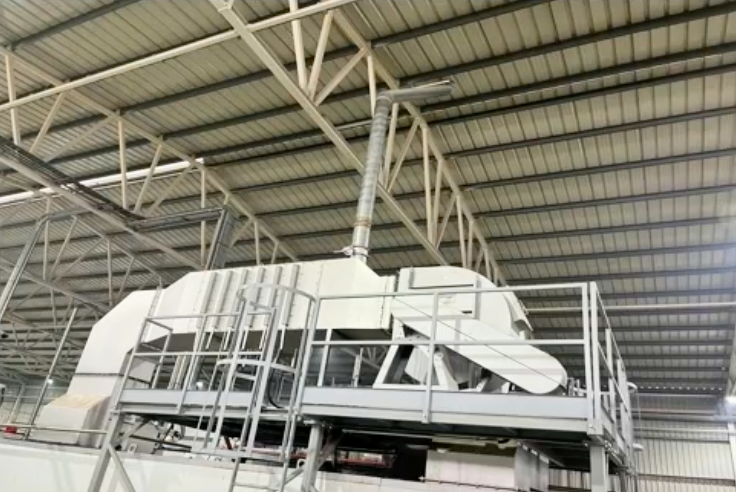
Talking about drying electrification is not, in our case, a theoretical exercise. As we mentioned in the presentation at the XVIII International Congress of Ceramic Technicians, at SYSTEMFOC we have already designed, manufactured, and implemented two 100% electric dryers that have been operating with complete reliability since 2021 and 2023 respectively.
These are real installations in demanding industrial environments, with working temperatures between 180°C and 200°C, adapted to the drying of vitreous mosaic, but with a technical model easily scalable to other types of ceramic products.
These dryers stand out for:
- An efficient recirculation system, in which air is alternately drawn and blown over the same drying planes through a piston system, ensuring thermal uniformity and operational efficiency.
- Conventional electric resistance blocks strategically located at the outlet of the recirculation fan, which allow direct heating of the air without losses or technical complexity.
- Modular and maintainable design: the resistances are easily interchangeable and use standardized components, which simplifies maintenance, avoids prolonged downtime, and reduces operating costs.
- Total adaptability: the accumulated technical experience and the results of these projects allow us to adapt this solution to different drying profiles within the ceramic sector, adjusting power, temperatures, geometries, or production rates.
These developments demonstrate that the electrification of ceramic drying is not only possible, but is already a technical and operational reality with measurable results in the plant.
Electrifying Drying: Competitive Advantages and Future Vision
The electrification of the drying process represents a key lever for industrial decarbonization, but also a tangible competitive advantage for ceramic companies that commit to efficiency, sustainability, and innovation.
Compared to traditional gas-based systems, the 100% electric dryers developed by SYSTEMFOC offer:
- Significant reduction in direct CO₂ emissions
- Greater control of the thermal process, with stability and drying homogeneity
- Lower maintenance costs thanks to the use of conventional components
- Design flexibility and adaptation to different types of ceramic products
- Compatibility with renewable energies and access to incentives such as Energy Savings Certificates (CAEs)
At SYSTEMFOC we have a clear roadmap: to develop real, viable, and replicable electric solutions that accompany the ceramic industry in its energy transformation without compromising competitiveness.
Because the electrification of drying is not a barrier or an abstract concept. It is an opportunity to improve processes, reduce consumption, and prepare for a more efficient and sustainable future.
Do you want to know how to adapt this technology to your plant?
Contact our team and we will help you evaluate the real electrification potential in your drying line.