
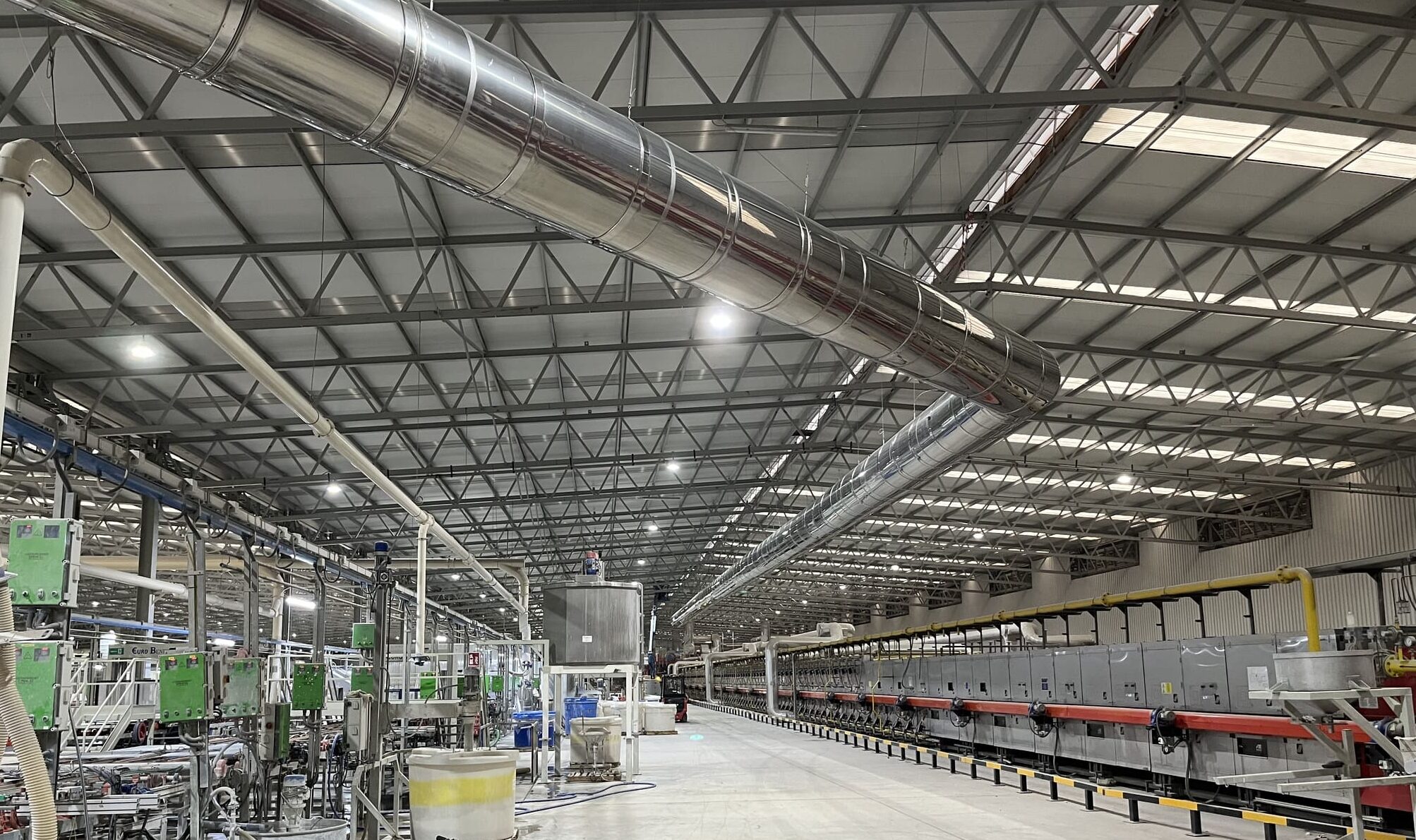
Energy efficiency has become a fundamental challenge for the ceramic industry, where processes such as firing and drying demand high energy consumption. Recovering part of the residual heat from kilns to reuse it in the dryer represents a high value-added technical solution that reduces costs and minimizes environmental impact. At Systemfoc, we have spent years developing custom solutions to automate, optimize, and make industrial processes more sustainable. In this article, we share one of our most representative success stories: the heat recovery project carried out for the tile manufacturer BALDOCER, which repurposes this energy, significantly improving production efficiency and ensuring long-term savings.
The challenge: improving the energy efficiency of the drying process
BALDOCER presented us with a very specific need: to utilize the heat generated in the firing kiln to power the dryer, as there was no functional connection that allowed for the reuse of the hot air expelled by the kiln in its entirety.
The key lay in preventing that heat from being lost through the stack and redirecting it in a controlled manner toward the dryer (located in the adjacent building). To achieve this, it was necessary to design an efficient, safe, and perfectly integrated system with the existing equipment. The solution had to adapt to the technical particularities of the kiln and the dryer, always respecting their operating parameters so as not to compromise the production process.
Installation of a custom heat recovery system
The project consisted of installing a heat recovery system that captures part of the hot air from the kiln and redirects it toward the dryer. To this end, a piping installation was developed to connect the kiln’s cooling suction stack with the dryer. This connection was made using an intake that would allow the hot air to be directed toward a new impulse turbine, with the aim of channeling the mass of clean, dry, and hot air to the horizontal dryer.
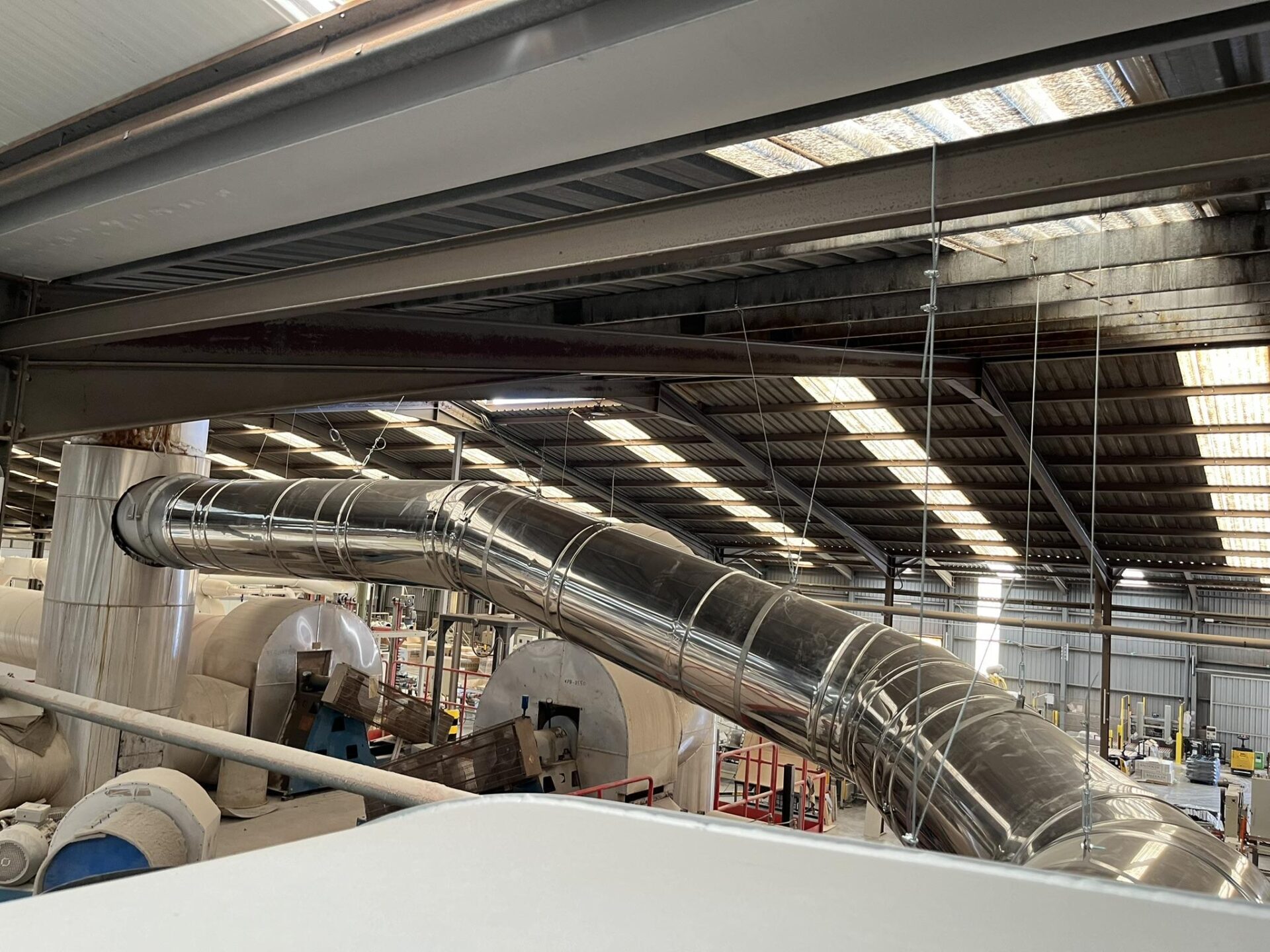
BALDOCER heat recovery: kiln-dryer connection
This circuit features an automated regulation system that acts on the recovery impulse fan drive, allowing for the automatic regulation of the hot air flow toward the dryer. In this way, it is possible to control the amount of heat through the recovery management panel based on the desired temperature, always seeking maximum savings and ensuring the dryer burners work as little as possible.
The system can be regulated both manually and automatically through the heat recovery management panels, allowing the entire process to be automated and ensuring dynamic behavior according to real production conditions.
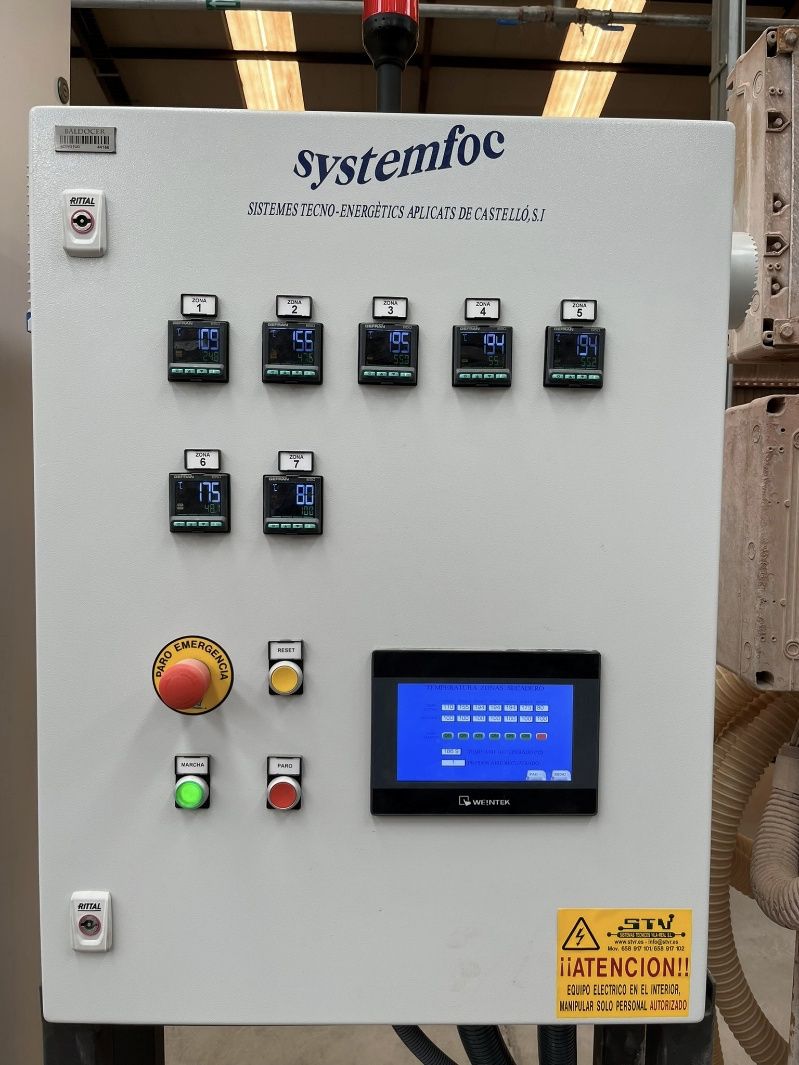
Heat recovery management panel
How the kiln was connected to the dryer to recover energy
The connection between the kiln and the dryer was designed with a modular approach and fully adapted to the BALDOCER configuration. Below are the main technical elements implemented:
Heat capture: air was taken from the kiln’s cooling suction stack; this air is clean and dry, as it comes solely from the heat exchanger area (which takes ambient air from the plant to cool the material) and the cooling suction hoods.
Hot air ducting: a modular system of polished stainless steel pipes (AISI 304) was used for both the interior and exterior, featuring thermal insulation to minimize energy losses.
This type of ducting offers several advantages:
- Better insulation compared to manually insulated steel ducts.
- Possibility of modifying the duct or repurposing the modules (pipes).
- Sealing guarantee through the ducting’s own CE marking (the duct has its pressure certifications and is well-sealed using rubber gaskets and joining clamps). Internal sealing is guaranteed, as is the correct sealing of the insulation, as it fits perfectly between modules.
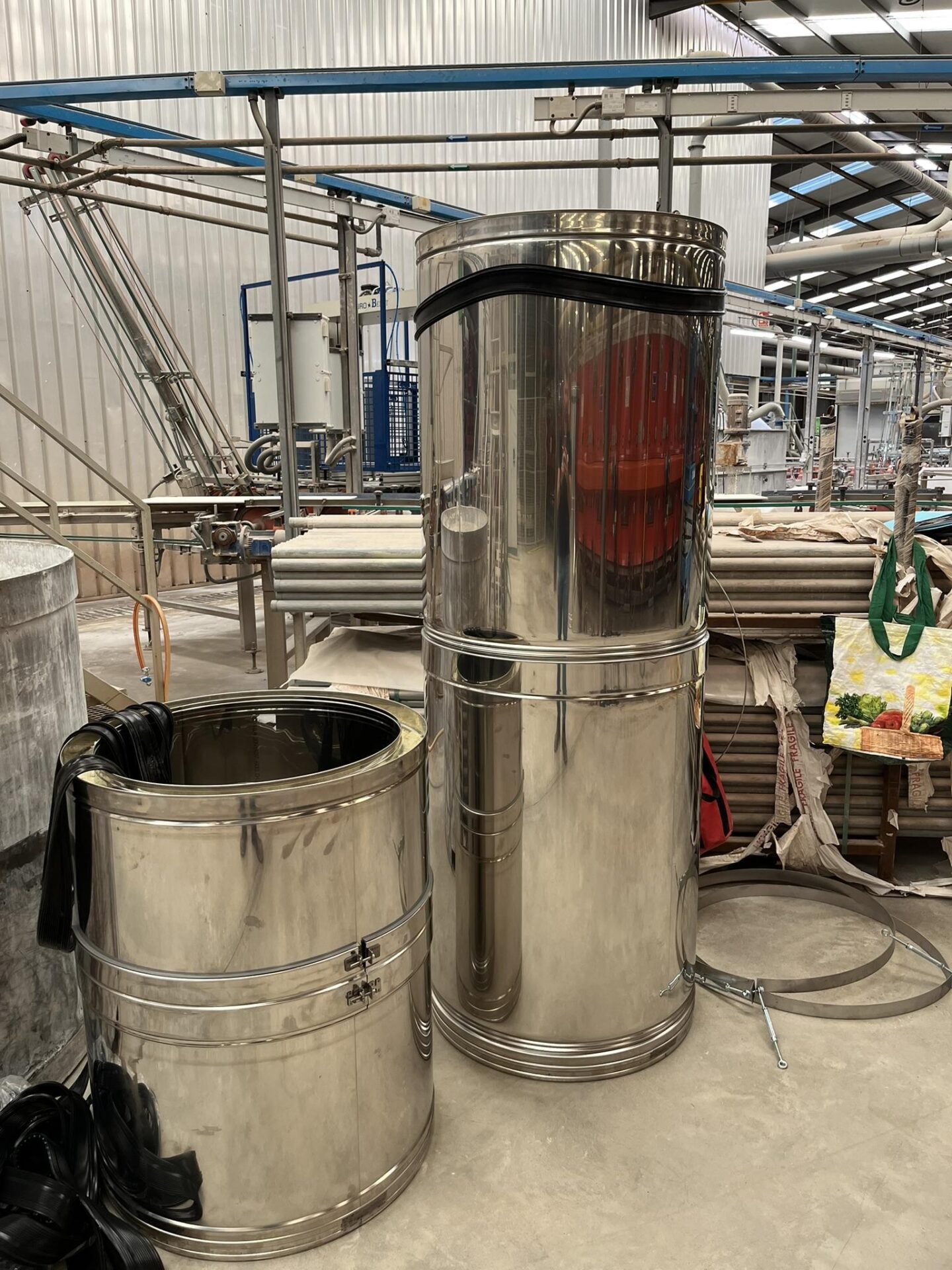
Duct modules
Flow regulation: this is performed by acting on the frequency drive of the heat recovery impulse fan. This can be controlled manually or via the installed PLC based on the desired parameters (recovered air temperature, manifold pressure, etc.). In the dryer area, we regulate the hot air supply in each zone using servomotor-actuated valves with position control via potentiometer, which open or close the air passage according to the dryer’s demand and the kiln’s conditions.
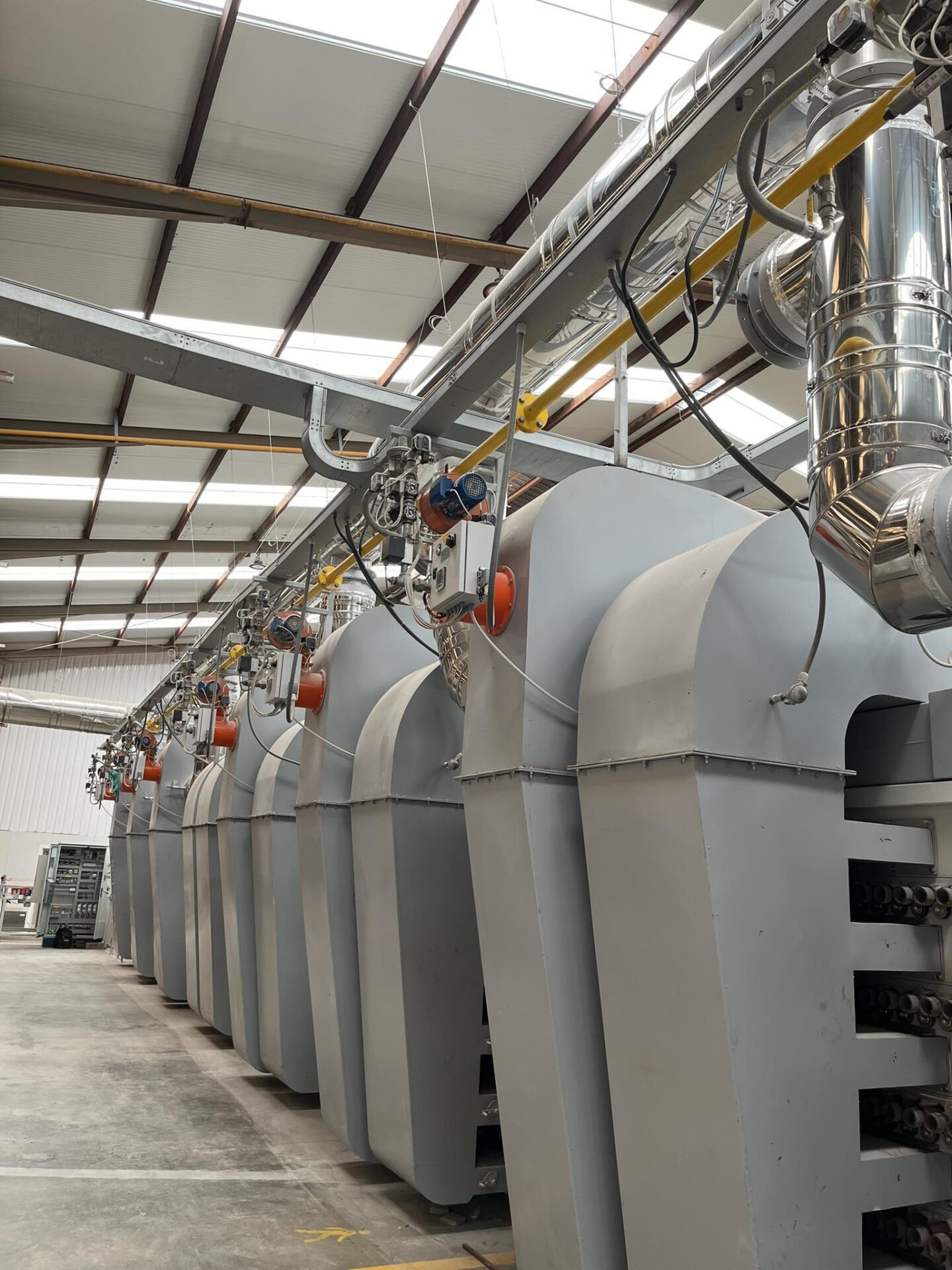
Horizontal dryer
Smart automation: a control system was integrated to allow everything from visualizing key process parameters (temperature, duct pressure, supplied air flow, etc.) to regulating the opening and closing of valves based on the temperature setpoints of each zone.
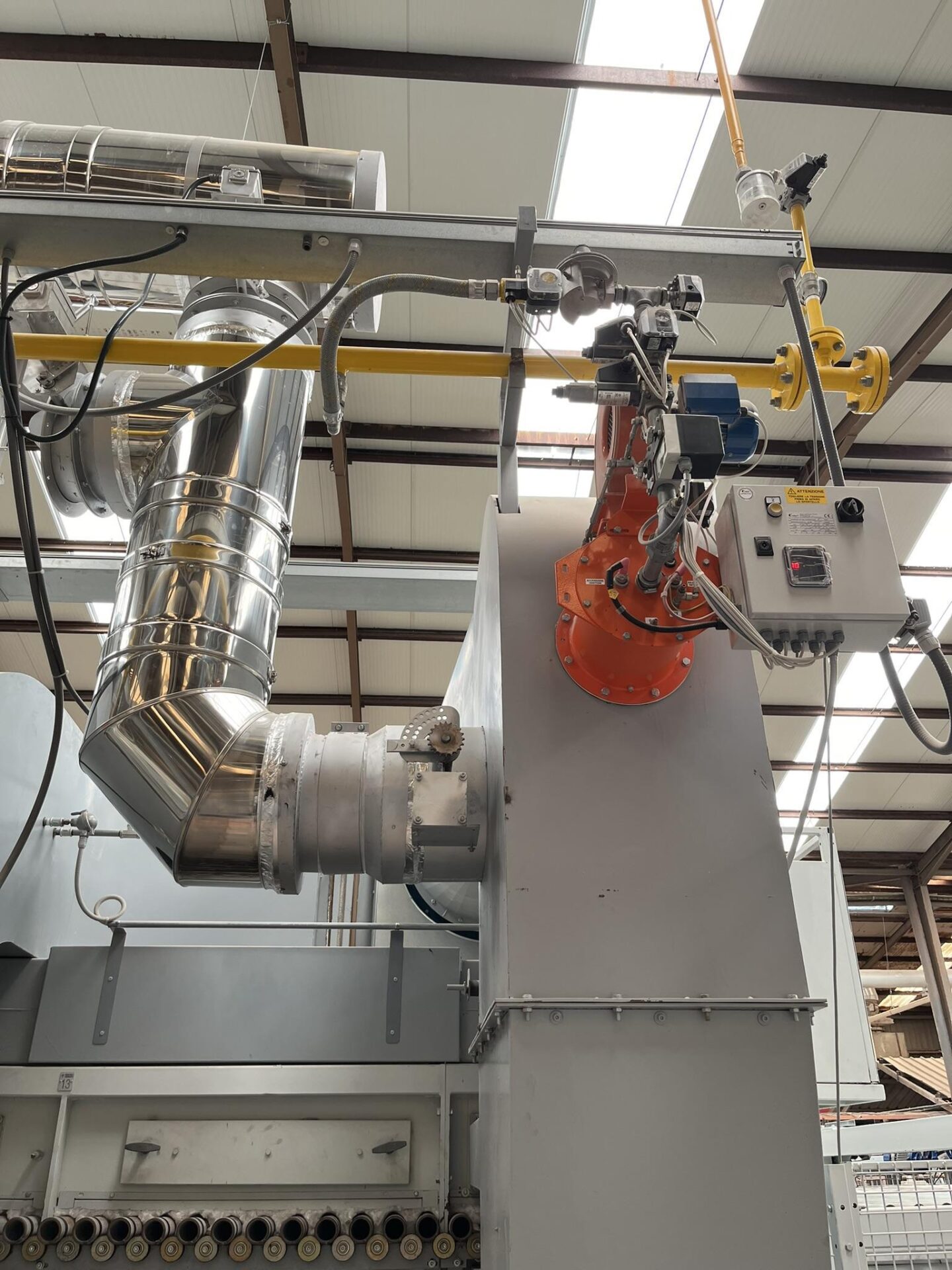
Recirculation pipe
Compatibility and safety: at all times, it was ensured that the dryer could continue to evacuate air through its stacks without risk of overpressure. To achieve this, measurements were taken beforehand, as were the valve openings and the frequency of the stack turbines.
Energy efficiency with a guaranteed return
This custom design allowed for the redirection of residual heat from the kiln without altering the performance of either piece of equipment, while maintaining stability in the kiln’s cooling zone. The result is a robust, reliable, and efficient system, perfectly compatible with obtaining Energy Saving Certificates (CAEs), which enables a considerable return on investment.
This case demonstrates that energy efficiency is not just a desirable goal, but an achievable reality with well-designed solutions adapted to each industrial environment.
Energy savings translate not only into cost reduction but also into a smaller environmental footprint, aligned with the sustainability policies demanded by the market.
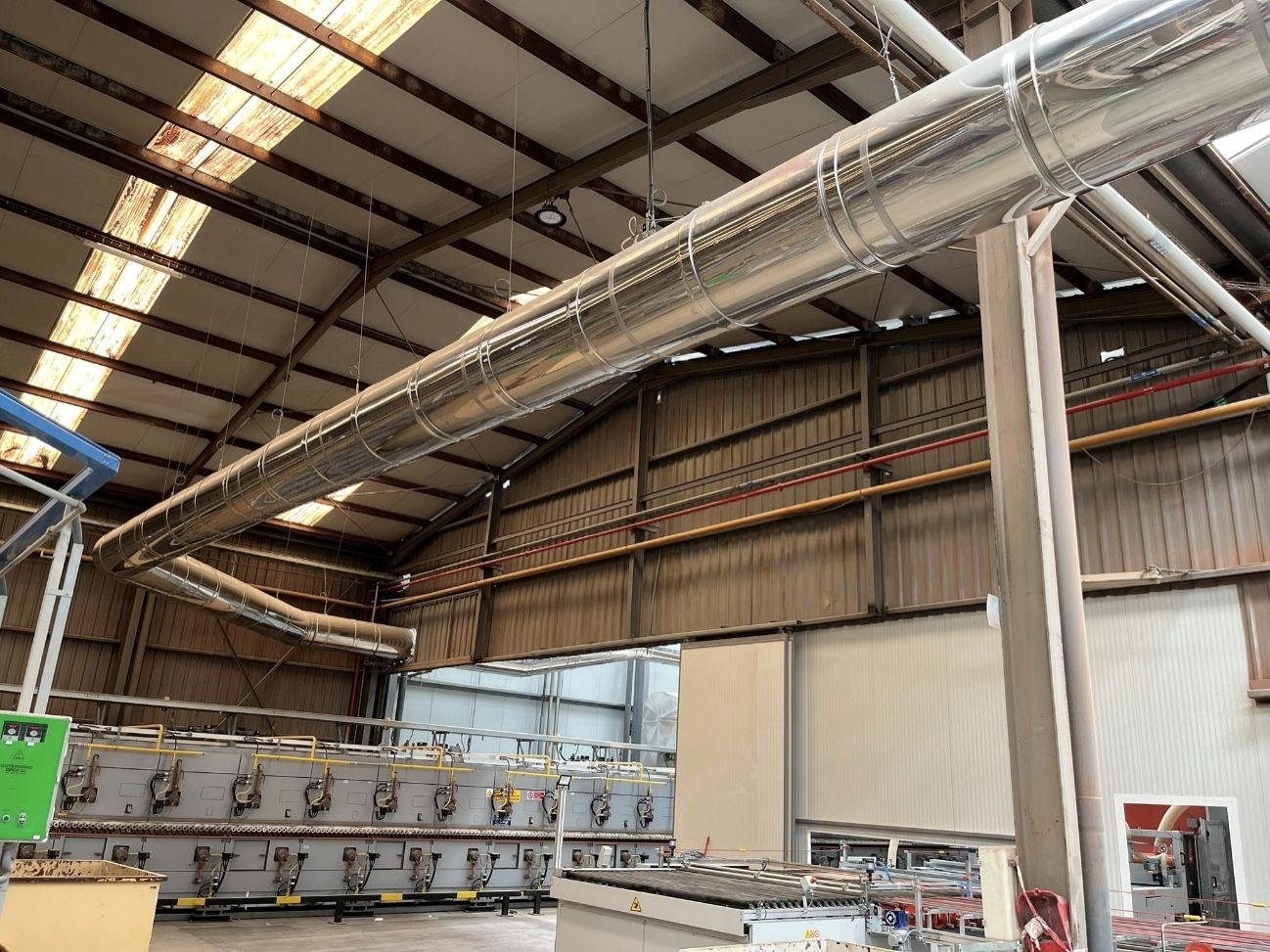
BALDOCER production plant: heat recovery duct
Heat recovery: technology applied to savings and sustainability
The BALDOCER success story demonstrates how the application of innovative technical solutions can transform an industrial process. The installation of the heat recovery system, designed and implemented by Systemfoc, has allowed for the utilization of energy that was previously wasted, improving dryer performance without compromising production quality.
This project reflects our ability to adapt to the real needs of each client, with an approach based on efficiency, automation, and energy savings. In an increasingly competitive environment, investing in energy optimization is not just a matter of cost, but a vision for the future.
At Systemfoc, we will continue to develop smart solutions that help our clients improve their processes, be more sustainable, and achieve their goals with guarantees. BALDOCER is just one example of the potential of well-applied technology.
Is your company looking for ways to reduce energy consumption and optimize its processes? Contact us and discover how we can help you achieve your goals.