
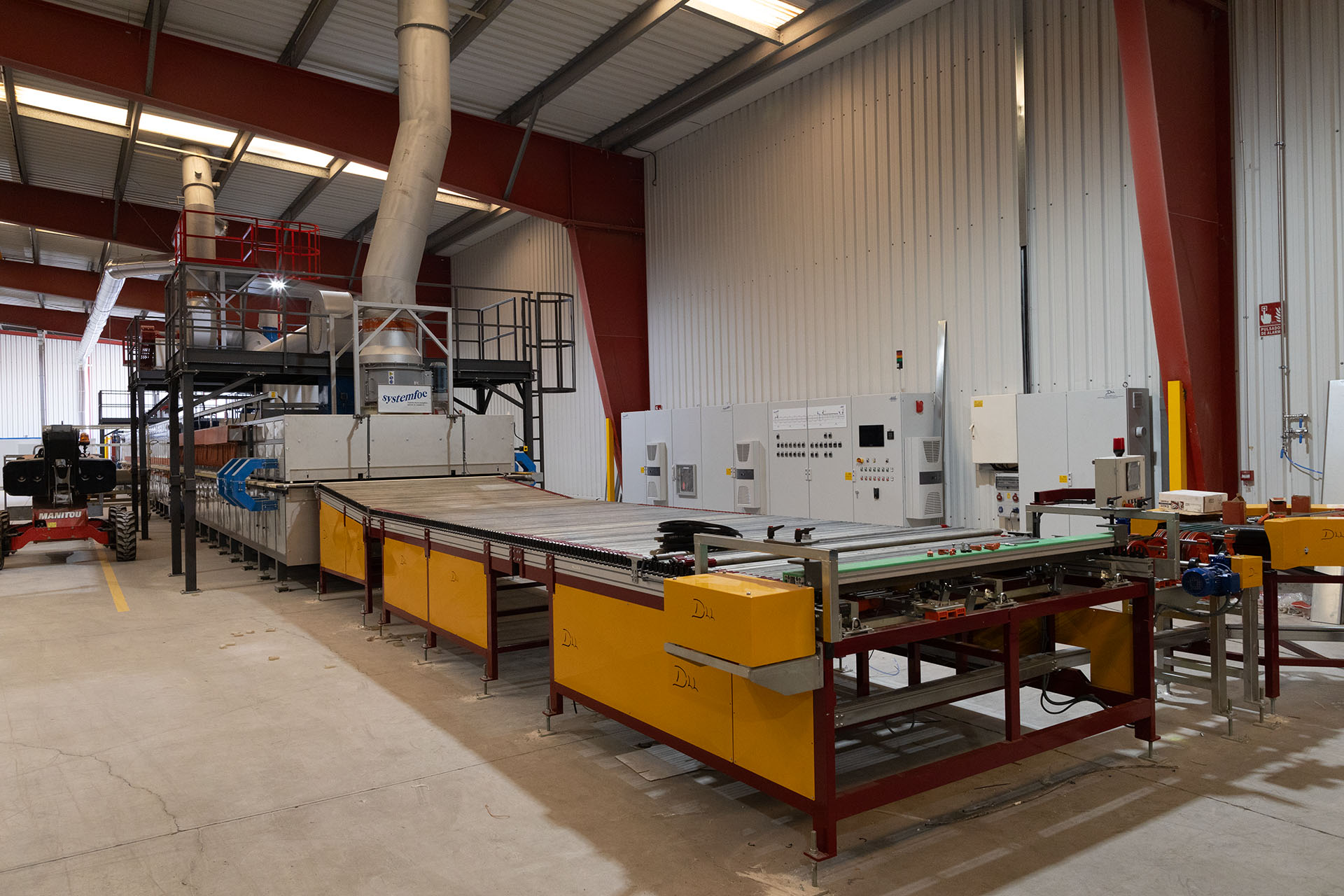
The transition towards a more sustainable and efficient industry is a priority in ceramics, especially in Castellón, where more than 90% of national production is concentrated and which serves as a hub for innovation and internationalisation. In a context shaped by the need to reduce emissions and optimise resources, the electrification of thermal processes is emerging as a key solution. At Systemfoc, we are committed to this approach with our own development: the 100% electric kiln, created in collaboration with ITC-AICE and Universitat Jaume I (UJI), which is already marking a turning point in the sector.
In this article, we explain how this technology is transforming the present and future of ceramic tiles, driving a new era of efficiency, sustainability and industrial leadership.
Electrifying ceramic production: an unavoidable challenge
The ceramics industry faces one of the greatest challenges in its history: reducing its dependence on natural gas and adapting to a new energy framework shaped by decarbonisation and efficiency.
Today, more than 300 kilns are still operating on fossil fuels, making ceramic firing the main source of the sector’s direct CO₂ emissions. Electrification not only eliminates this source of emissions, but also enables more precise thermal control, optimises consumption and accelerates the shift towards cleaner production models.
You can learn more about these differences in our comparative article on electric and conventional kilns.
This change is not a utopia: it is a strategic necessity to meet Europe’s 2050 climate neutrality targets and the SDGs set out in the 2030 Agenda.
100% electric kiln: technology for more efficient and sustainable ceramics
Our 100% electric kiln completely eliminates gas combustion and is based on a system of high-performance heating elements capable of reaching temperatures of up to 1,200°C in just a few hours.
Its design includes:
- Ceramic heating element system with high-resistance filaments (1,500–1,600°C) for uniform firing with no cold spots.
- PID control with thyristors to precisely regulate power and reduce energy consumption.
- Advanced, low-inertia thermal insulation that minimises losses, reduces start-up time and keeps the external temperature ≤70°C.
- Zoned cooling system, enabling controlled temperature drops and ensuring the final quality of the piece.
- Total thermal uniformity, resulting in consistent pieces with no warping or irregularities.
This kiln can achieve energy savings of up to 50% compared to conventional gas kilns.
The validation of this technology at the Equipe Cerámicas plant has been decisive in demonstrating that electrification is not only viable, but also profitable, without affecting production speed or quality.
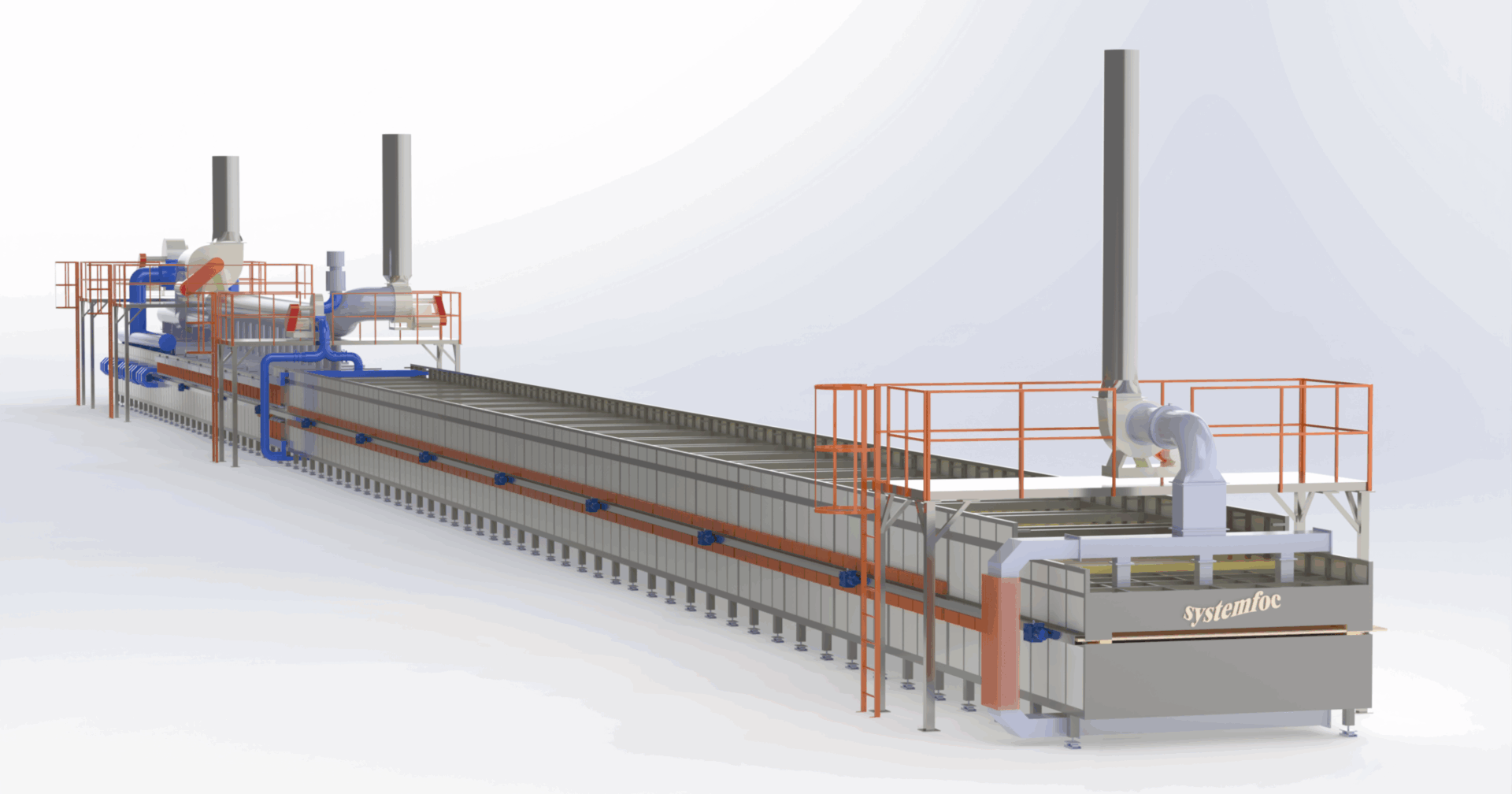
Representation of Systemfoc’s 100% electric kiln
Environmental, economic and industrial advantages
Implementing the 100% electric kiln offers concrete, measurable benefits for companies:
- Emissions reduction: by eliminating the use of natural gas, direct CO₂ emissions are removed and the carbon footprint of the final product is minimised.
- Energy efficiency: electrical energy enables more precise and stable control of the firing process, reducing thermal losses and improving overall performance.
- Competitiveness: companies that choose to electrify their production improve their position in new international markets, which are increasingly demanding in terms of ESG criteria.
- Profitability: savings in energy costs and access to incentives such as CAEs offset the initial investment in a short time.
- Innovation and skilled employment: the development of these technologies creates new specialised technical professional profiles focused on efficiency and industrial electrification.
Therefore, the implementation of the 100% electric kiln is becoming firmly established as a highly relevant element within the structural transformation needed by Castellón’s ceramics cluster.
A process that, as we always mention, must be supported by active collaboration between industrial companies, technology centres and public institutions, with a shared goal: to accelerate the sector’s energy transition through concrete, scalable solutions aligned with today’s challenges.
Contribution to the Sustainable Development Goals
Electrifying the ceramics process directly contributes to meeting SDGs 7 (affordable and clean energy), 9 (industry and innovation), 12 (responsible consumption and production) and 13 (climate action).
Decarbonising the ceramics industry is not only a regulatory obligation, but also a real opportunity to innovate, grow and lead through sustainability. And the 100% electric kiln is tangible proof of how technology is the driving force behind that change.
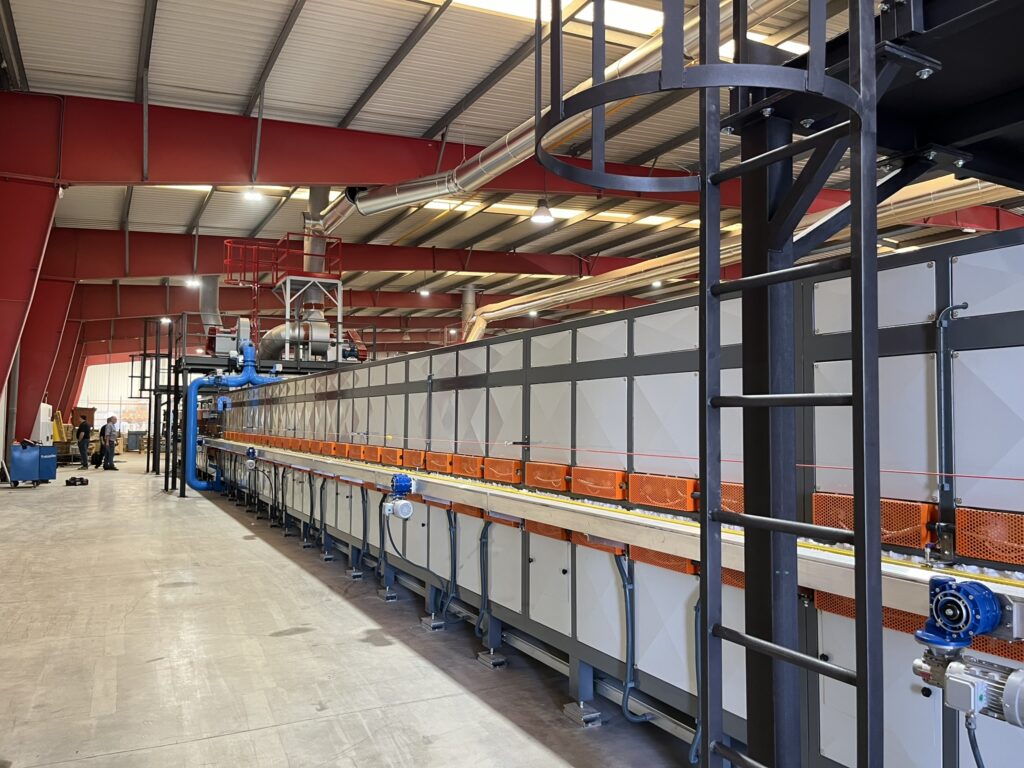
Systemfoc’s 100% electric kiln: economic, environmental and technical efficiency.
Moving towards the ceramics of the future
At Systemfoc, we work every day to offer solutions that reduce the industry’s environmental impact without compromising production excellence. Our electric kiln is a firm step towards that future: an innovative, scalable technology fully compatible with today’s industrial fabric.
Its modular design and ability to reach high temperatures efficiently make it a solution that can be easily adapted to other industrial sectors with intensive thermal processes.
Electrifying these processes represents a real opportunity to reduce consumption, decrease dependence on gas and move towards a more efficient, sustainable production model integrated with renewable energy sources.
If your company is looking to move towards a cleaner and more competitive production model, contact our team and find out how we can help you electrify your plant.
📌 This article has been published in the specialist magazine Técnica Cerámica, in recognition of its relevance to the ceramics sector.